
Culture & Language
Korean Culture
Driven by cutting-edge technologies and trends, Seoul is one of the most fast-paced and high-tech cities in the world. However, as progressive as Koreans are, many still retain traditional and Confucian values. Korean culture and customs are deeply rooted in family values, respect, and obedience toward people perceived as having higher status, rank, or age. This includes parents, teachers, older siblings, or even senior co-workers. People who are treated as having “seniority” in return, are expected to have more responsibilities and obligations towards their juniors. In addition to valuing family above anything else, Koreans also place high importance on status and dignity, and every action of an individual is said to reflect on one’s family, company, and country.
Customs and Courtesies
At Osan AB, both the U.S. and ROK National Anthems play at 1730 Monday though Friday, excluding holidays and down days, and Taps plays at 2200. During the playing of both national anthems, all personnel and family members are expected to show respect. Member in uniform outside should render a salute, while those in civilian clothes should stand at attention facing the flag with the right hand over the heart and headgear off. Drivers on base should also pull over safely and remain stopped until music is over.
During Taps at 2200, everyone should pause, stop vehicles if driving ,and observe a brief moment of silence in honor of fallen service members.
Additionally, military members are expected to render proper customs and courtesies to our ROK partners, including saluting superior ROK officers, in keeping with our commitment to the strength of the U.S.-ROK alliance.
Greetings and Body Language
The bow is the traditional Korean greeting, although it is often accompanied by a handshake among men. To show respect when shaking hands, support your right forearm with your left hand. South Korean women usually nod slightly. Western women may offer their hand to a Korean man. Everyone, regardless of gender, bows when departing. Koreans consider it a personal violation to be touched by someone who is not a relative or close friend. Touching, patting, or back slapping someone who is not a close friend or relative is best avoided during interactions.
Korean Pop Culture
Often referred to as “hallyu” or the Korean Wave, Korean popular culture is now widespread across the globe. The Korean Wave includes Korean pop music, dramas, and movies. Although K-Pop, like BTS, is a hot topic these days, it was originally K-Dramas that put Korean pop culture on the international map.
Kimchi
Kimchi is a traditional Korean fermented dish made from seasoned vegetables and mixed with a variety of seasonings including chili pepper, garlic, ginger, and scallions. This iconic Korean staple comes in many varieties and has a rich history dating back to ancient times, playing a significant role in Korean cuisine and culture. Its fermentation process is believed to promote the growth of beneficial probiotics and is valued for its health benefits, including improving digestion and boosting the immune system.
Common kimchi varieties include Baechu Kimchi, which is the most common and made with Napa cabbage fermented with a mix of chili pepper, garlic, ginger, and fish sauce. Another similar variety is Kkakdugi, made similarly but using Korean radishes. Oi Sobagi is a cucumber kimchi filled with seasonings, more common during the summer. Pa Kimchi is made with green onions and is slightly sweeter. Yeolmu Kimchi is a type of “water kimchi” made with radishes and a thin clear broth. Chonggak Kimchi (Ponytail Radish Kimchi) is named after the ponytail-like appearance of the radish leaves and includes very small, sweet radishes, noted for their crunchy texture and robust flavor. Baek Kimchi (White Kimchi) is a non-spicy kimchi that lacks red chili peppers, making it mild and sweet, commonly served to children and suitable for those who prefer less heat.
National Holidays
Common Korean Etiquette
Dining Etiquette
Drinking
Personal Space
Most westerners are used to having a bubble of personal space, and often feel uncomfortable when others get too close. Korea, like many other Asian countries, is so densely populated that Koreans are more accustomed to living life in closer proximity to each other. Whether taking the subway, lining up for groceries, or simply walking around town, expect to be doing it up close and personal with complete strangers.
Korea & Your Children
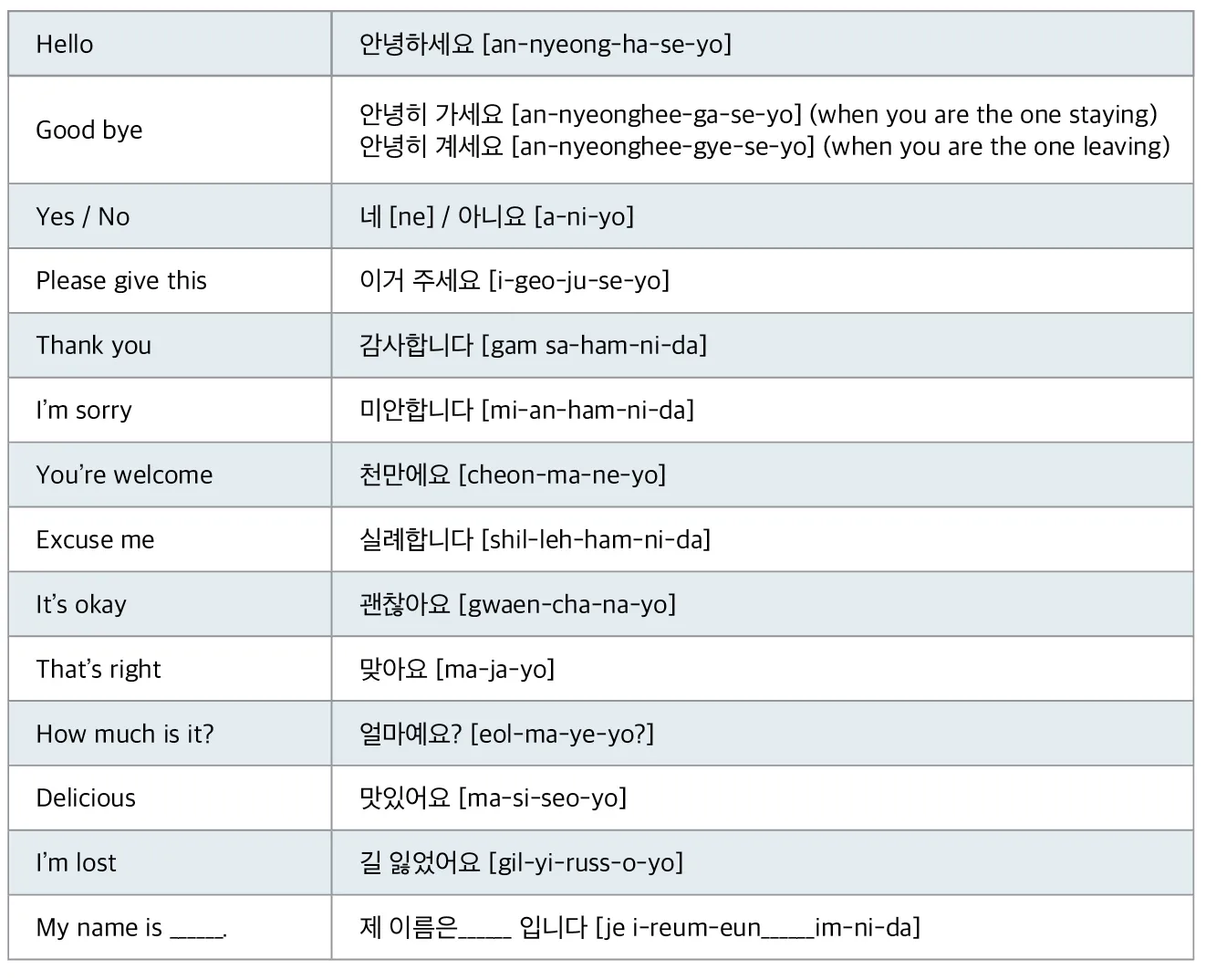
Children are seen as a treasure in Korea, and you’ll soon notice how friendly many people are when you are out and about with yours. It’s not unusual for Koreans, especially older ones, to offer sweets to your child, or pat their hair or cheeks, or even offer to hold them when they are fussy. Respect for elders and authority figures is deeply ingrained in Korean culture, so teaching your children how to say “thank you” (감사합니다 – kamsahamnida) and do a little bow will usually impress local nationals and may occasionally result in an extra treat. From a young age, children are encouraged to be responsible members of society. This includes participating in community service and being mindful of social etiquette.
South Korea is a very safe country for children. There is a strong sense of community and collective responsibility where neighbors often look out for each other and dote on their children. Public spaces and transportation are typically child-friendly, and it isn’t unusual to see young children using public services independently.
You can embrace traditional celebrations and customs with your child, such as the first birthday (Doljanchi) and Children’s Day (celebrated on May 5th), to share the importance of children in Korean culture with them. These events are marked with family gatherings, gifts, and special activities for children, and children are often given sweets when visiting others.
Holding Hands Isn’t Restricted to Couples
It’s a common sight to see friends holding hands or putting their arms around each other in Korea regardless of gender. Don’t be alarmed if a same-sex friend puts their arm around you or is overly touchy. Despite maintaining a “no-touching” social standard with acquaintances and strangers, this display of affection is simply their way of showing they think of you as a good friend and are comfortable.
The Subway System
The transportation system in Korea is clean, safe, and remarkably efficient. With the average price of an adult ticket around KRW 1,400 (about 1 USD), it’s also extremely affordable. Trains are so reliable, down to the minute, that you could set your watch according to their schedule. The closest train station to Osan Air Base is Songtan Station, about a ten-minute walk from the Osan AB Main Gate. There are also bullet-trains called the KTX and SRT connecting the two biggest cities: Busan and Seoul. They are more expensive, but in just over 2 hours you can be on the completely opposite end of South Korea.
Brushing Teeth
Koreans typically brush their teeth after every meal, even when out with friends or co-workers, which can take a minute to get used to. People often carry their toothbrushes with them when they go to work, a business meeting, or even lunch with friends. Bathrooms in public spaces such as work, shopping centers, and subway stations often have people queuing for the sinks to brush their teeth.
Country Facts
Things to Remember:
Language References